

A training to integrate and transmit
You will deepen your practice of yoga, meditation and self-discovery through a living understanding of its traditional tools.
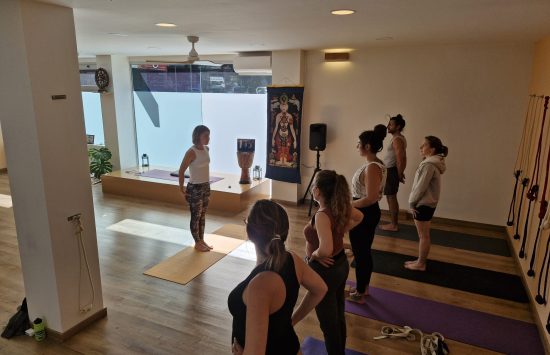
You will acquire the necessary foundations for the practice and teaching of yoga through the study of āsana, prāṇāyāma, Yoga Nidra, meditation, meditative arts, philosophy and mantra chanting.
You will move closer to the essence of Kashmir Tantric non-dualism, a vision that integrates discipline and joy and invites you to live in touch with your own instinctive wisdom.
You will also deepen your understanding of the fundamentals of Tibetan Buddhism, such as impermanence, compassion and the development of bodhicitta.
Throughout the process you will prepare to accompany processes of self-knowledge and transformation by applying our school’s methodology and worldview.
Different traditions, one coherent teaching
You will learn to design and guide yoga and meditation sessions following the methodology developed by our school.
This approach is the result of years of research, practice and study trips through different schools and traditions of yoga.
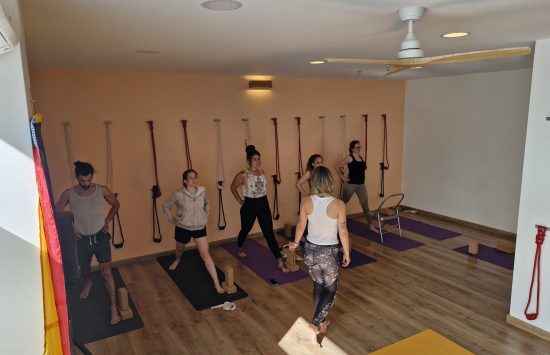
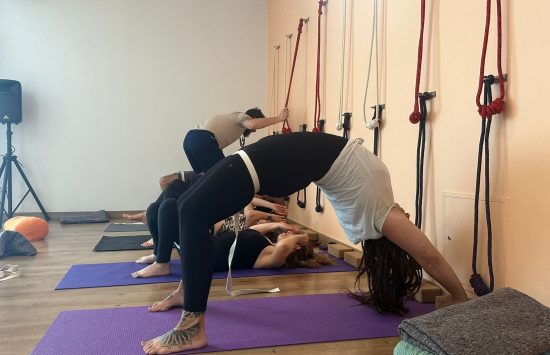
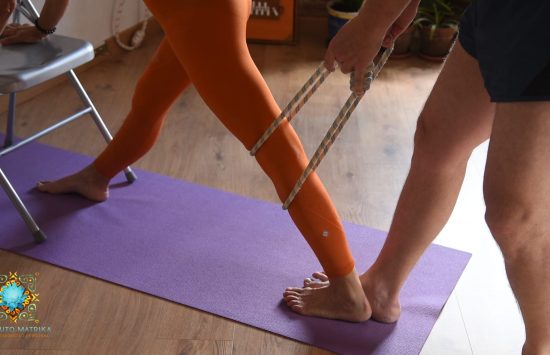
- Iyengar Yoga: precision, alignment and observation.
- Hatha Yoga: integration of body, breath and energy.
- Vinyasa Krama: conscious progression and adaptation of practice.
- Traditional Tantra: study of consciousness and non-dual experience.
- Tibetan Buddhism: compassion, impermanence and mind training.
Structure of the training
The journey is organized into eight main areas of study and practice.
Philosophy of yoga
History, texts, principles and worldviews of the yogic traditions.
Āsana and prāṇāyāma
Body practice, breathing, observation and progressive development.
Physical and energetic anatomy
Understanding of the body, movement and energetic foundations.
Principles of Ayurveda
Foundations for understanding constitution, balance and lifestyle.
Teaching methodology
Conscious design, adaptation and guidance of yoga sessions.
Traditional Tantra
Foundations of Kashmir Shaivism and the non-dual vision.
Meditative arts
Mantra chanting, tāṇḍava, sound vibration and different forms of meditation.
Tibetan Buddhism
Compassion, forgiveness, impermanence, unconditional love and bodhicitta.
An experiential learning
We believe that you cannot teach what you have not directly experienced.
That’s why the training combines an experiential, theoretical and practical approach. This process allows you to understand the benefits and the psychology of practicing and teaching yoga.
The purpose is for you to integrate this knowledge into your own experience before transmitting it in an authentic, responsible and conscious way.